Bruin, Magdalene, Molund and Östanhav
In spring 2026, wreck investigations and the recovery of lost fishing gear were carried out on four environmentally hazardous shipwrecks south of the town Karlskrona. In total, more than 5 tonnes of lost fishing gear were recovered, and fuel oil was detected in two of the wrecks.
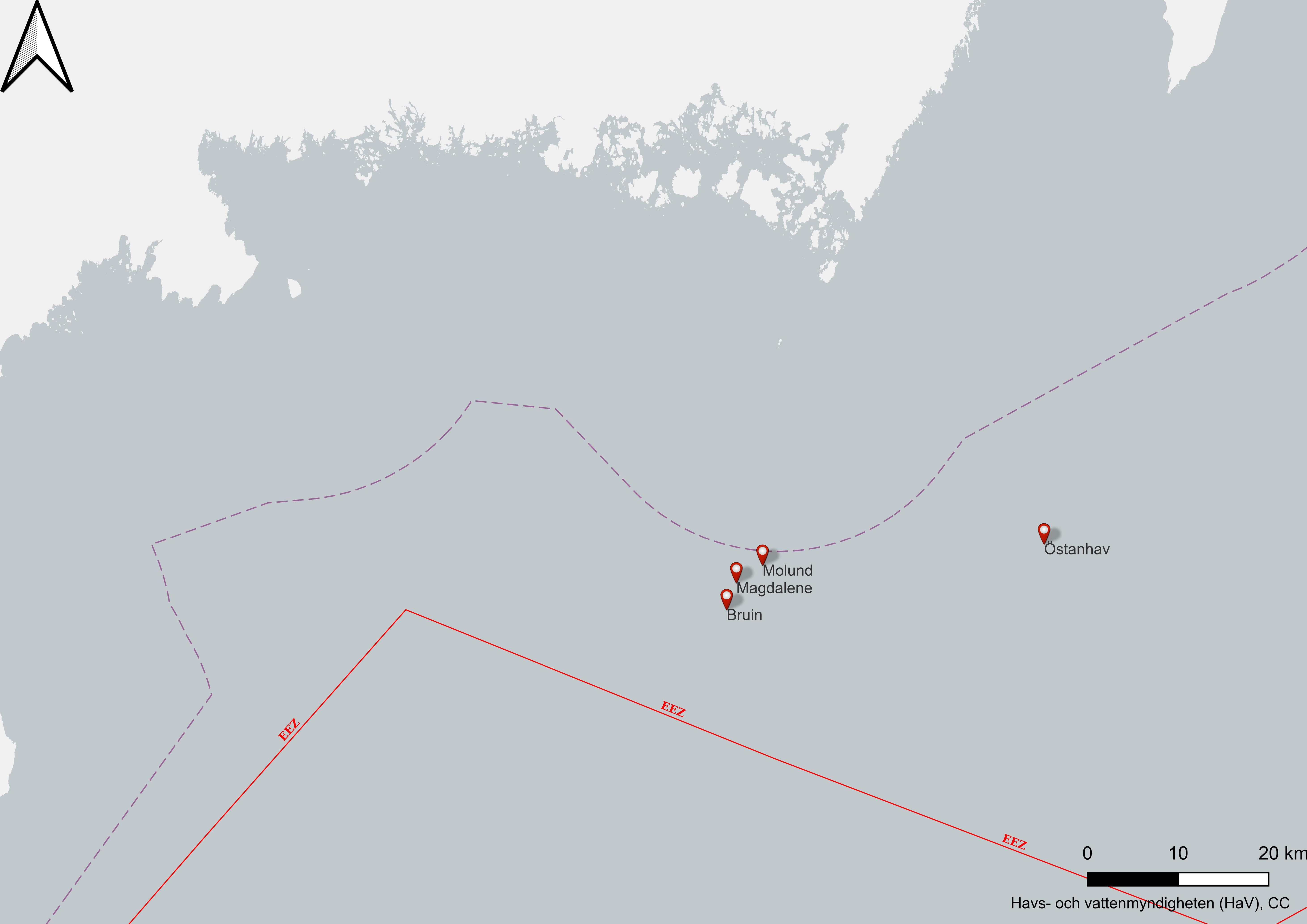
The wrecks M/V Bruin, M/S Magdalene, M/F Molund and M/S Östanhav are located within a geographically limited area approximately 25 nautical miles southeast of Karlskrona, in Blekinge County. The wreck area has a high intensity of ship traffic since it is located in one of the major shipping lanes in the Baltic Sea. The wrecks lie at depths of between 50 and 60 metres, and the seabed mainly consists of clay and mud.
Environmentally hazardous wrecks
The wreck Östanhav is included in the list produced under the Swedish Maritime Administration’s government assignment (2009–2015) identifying the most environmentally hazardous wrecks in Swedish waters. The other three wrecks were identified as potentially environmentally hazardous during SwAM's further research within the project.
An environmental risk assessment has been carried out for around 30 wrecks on the list using the VRAKA risk assessment tool.
Investigations
In April 2026, SwAM’s framework contractor JD-Contractor investigated the wrecks. The operation resulted in the recovery of more than 5 tonnes (5,170 kg) of lost fishing gear. Several entangled seals were found in the gear, all deceased, besides fish. Environmentally hazardous oil was detected in two of the wrecks.
Cost of the operation
The successful operation to recover lost fishing gear and investigate the presence of oil in the four environmentally hazardous wrecks cost just under SEK 20 million. Compared with the cost of cleaning up marine and coastal environments after an oil spill, preventive measures on hazardous wrecks represent both an economic and environmental benefit to society.
Bruin
The wreck of Bruin lies upside down with the bow buried in sediment. The hull is in good condition and structurally intact. Photo: JD Contractor.
In 1975, the Norwegian motor cargo vessel M/V Bruin, carrying coke (coal), collided south of Karlskrona and sank. The wreck, approximately 66 metres long, now lies inverted with the bow embedded in sediment. While the hull remains in good condition, areas with sparse fouling show a high degree of corrosion.
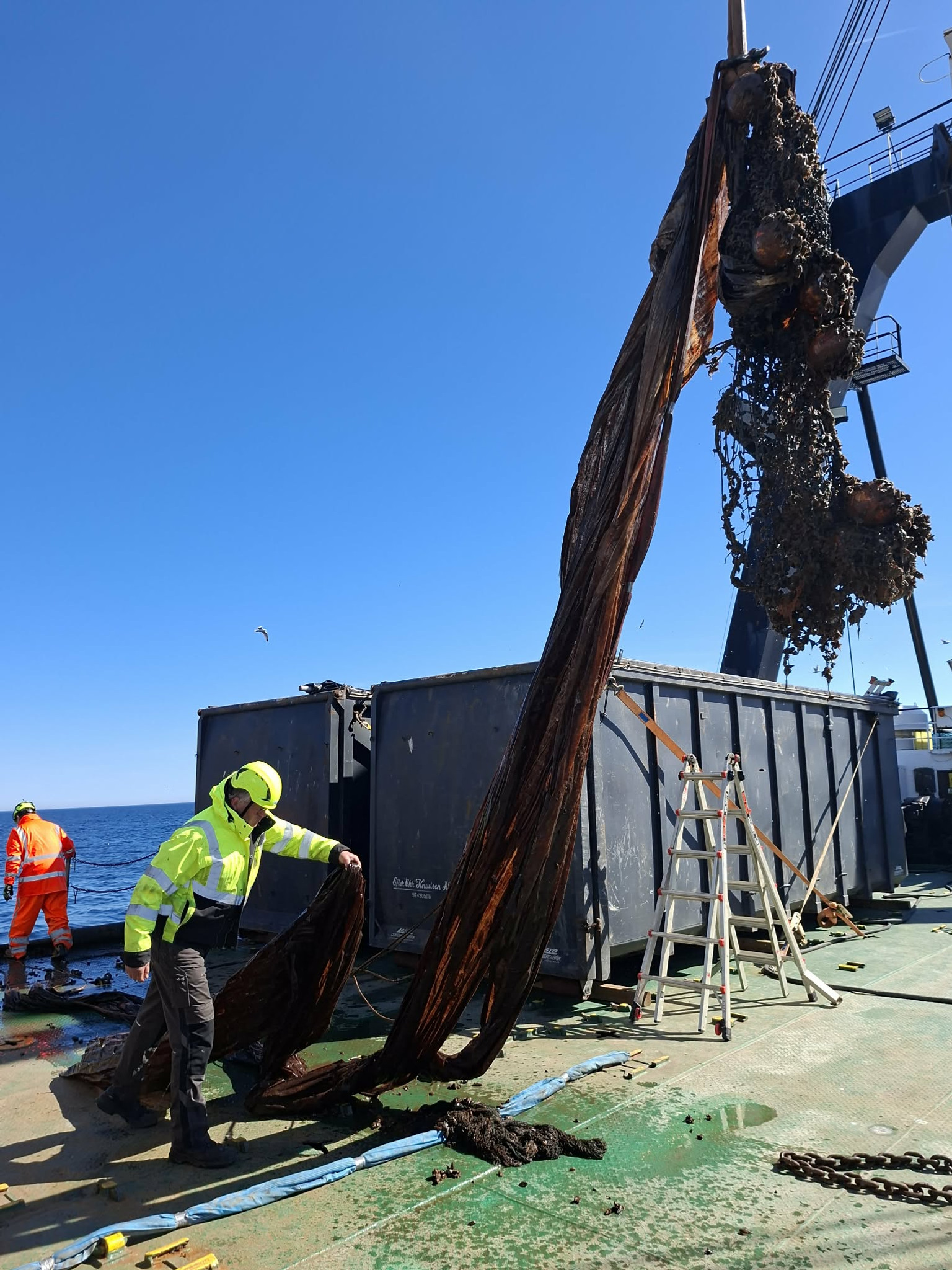
A total of 150 kg of lost fishing gear was recovered. Photo: JD Contractor.
Investigation
In April 2026, SwAM conducted a detailed investigation of oil presence by drilling holes in the hull at 15 locations. Oil was detected at five points. Two of these were in fuel tanks with a capacity of approximately 43 m³ each. As these are bottom tanks, further drilling to determine the exact volume was not possible, but the quantity is assumed to be significant. Additional oil was also detected in the engine room.
A total of 150 kg of lost fishing gear was recovered, consisting mainly of trawl nets and ropes, as well as davits and a large tarpaulin.
Magdalene
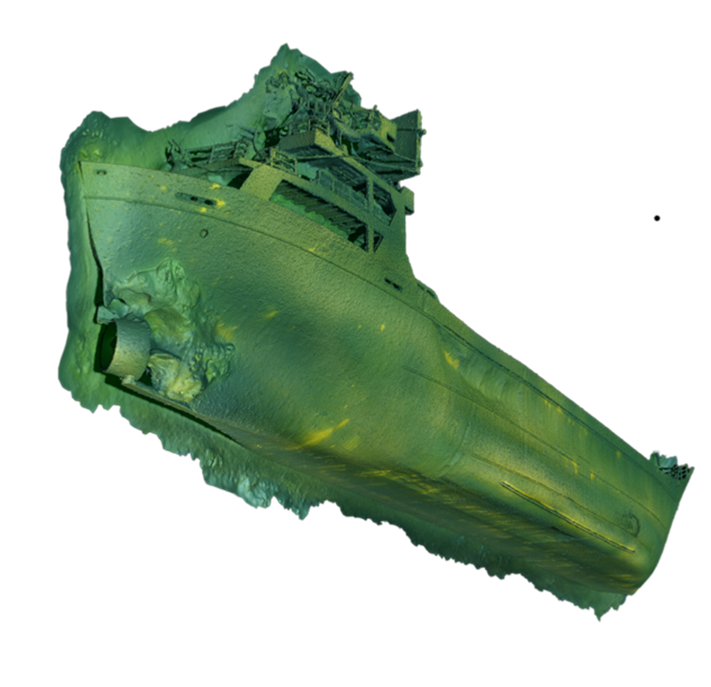
Photogrammetry image of the Magdalene wreck. Photo: Ocean Discovery.
M/S Magdalene sank in 1981 following a collision with another vessel while en route between Seaham and Raumo. According to available data, the vessel had a gross tonnage of 1,420 tonnes and measured 77 metres in length and 11.8 metres in width. The cargo consisted of coke (coal).
The wreck lies completely on its port side with a list of approximately 14°, and more than half of the vessel is embedded in the seabed.
Investigation
In a previous investigation in 2024 results showed that no lost fishing gear was present on the wreck, and an oil survey was therefore initiated straight away. A total of 19 holes were drilled, and oil was detected in two fuel tanks on the southern side of the wreck.
The exact quantity is difficult to determine due to the small tank sizes and lack of precise tank dimensions, but it is estimated to be limited, up to approximately 1–2 m³.
Molund
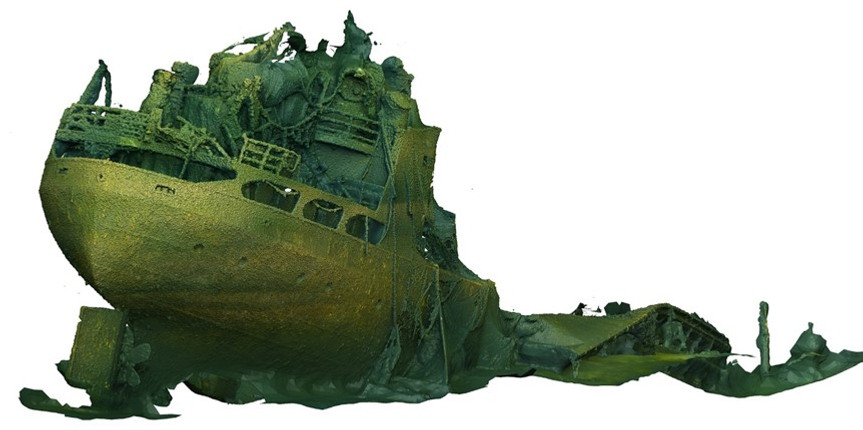
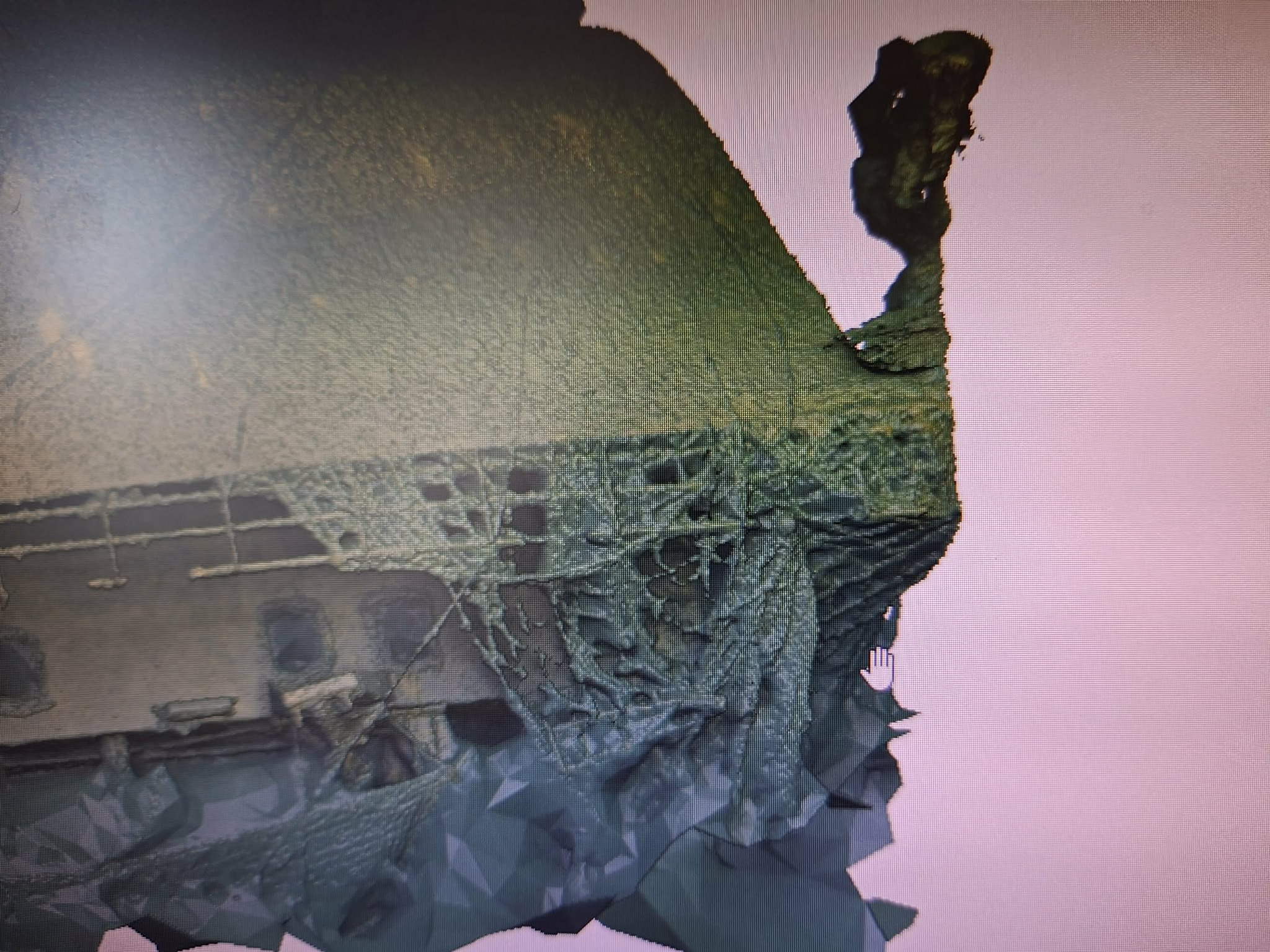
The Molund wreck was covered in lost fishing gear (trawl nets) before its recovery in April 2026. Photogrammetry image of the wreck. Photo: Ocean Discovery.
M/F Molund was a Norwegian vessel built in 1959 that sank in June 1983 after colliding with the Brazilian cargo vessel Monte Alto in dense fog south of Öland. The collision caused severe midship damage, and six of the eight crew members lost their lives.
The wreck lies upright on a soft seabed with a slight list to starboard. The bow is buried in sediment, while the port side of the hull has collapsed and rests at a steep angle against the seabed.
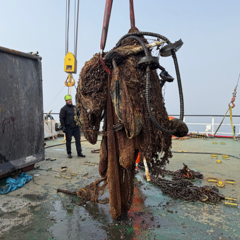
The Molund wreck was covered in lost fishing gear (trawl nets) before its recovery in April 2026. Photo: JD Contractor.
Investigation
SwAM’s contractor drilled 18 holes in the wreck but found no traces of oil. However, more than two tonnes (2,100 kg) of lost fishing gear were successfully recovered, consisting mainly of trawl nets.
The recovered nets showed evidence of marine mammals having become entangled over time. Two seals were identified: one was released at the surface, while the other disintegrated during recovery. Additional remains of marine mammals and fish, including bones and skulls, were also found in the nets.
Östanhav
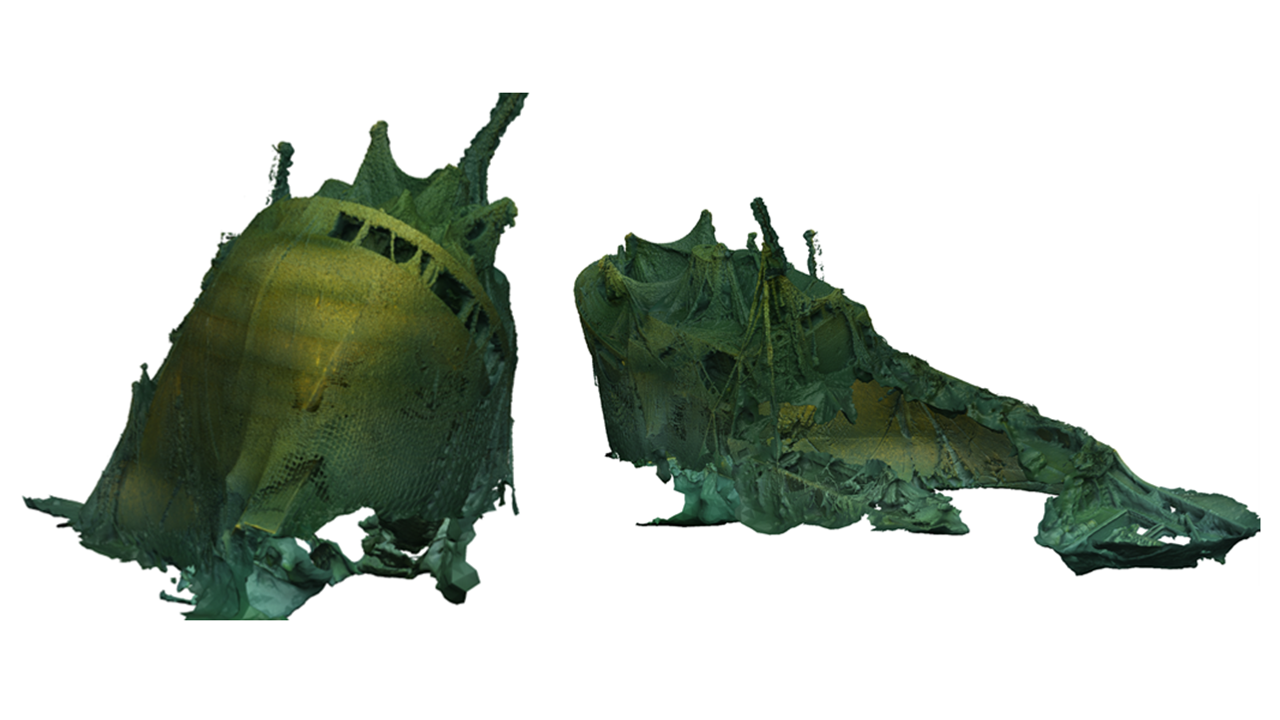
The Östanhav wreck was covered in lost fishing gear before its recovery in April 2026. Photogrammetry image of the wreck. Photo: Ocean Discovery.
The vessel Östanhav sank during a stormy voyage between Kalmar and Gdynia. Severe weather conditions combined with a cargo shift caused a critical list, forcing the crew to abandon the vessel. Despite a dramatic rescue operation, two crew members lost their lives.
The wreck leans steeply forward and to starboard, with the bow buried in sediment up to midship. The visible parts of the hull, measuring 46 metres in length and 10.2 metres in width, are in relatively good condition.
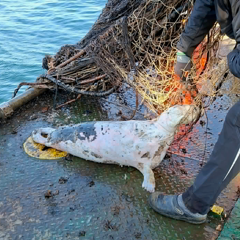
One of the dead seals found during the recovery of the lost fishing gear. Photo: JD-Contractor.
Investigation
SwAM’s contractor carried out 12 drillings to determine whether the wreck contained oil, but no significant quantities were detected.
However, nearly three tonnes (2,920 kg) of lost fishing gear were successfully recovered, mainly consisting of trawl nets. Several marine mammals were recorded in the recovered gear, all in an advanced state of decomposition and partially disintegrating during the recovery process.
A total of five seals were identified during the investigation and recovery work. Additional remains of marine mammals were also observed, indicating that further individuals have likely been subject to ghost fishing over an extended period of time.
Sensitive environment in the vicinity of the wrecks
Sensitive natural environments are located near the wrecks and may be affected by a potential oil spill. Directly to the north lies, among other areas, the Utklippan nature reserve, which is an important site for resting migratory birds such as long-tailed ducks, as well as seals.
Rock pools in the area serve as breeding habitats for several red-listed amphibian species. The marine environment is characterised by bladderwrack and blue mussels, which provide important ecosystem services through filtration and contribute to improved water quality.
For more information, see the Swedish Environmental Protection Agency’s page on protected nature.


