News • 24 August 2026
Tanzanian marine wardens learn to use drones for ocean protection
The Swedish Agency for Marine and Water Management and Civil Aviation Training Centre in Tanzania train marine wardens to integrate drone technology into their daily work, to turn data into actions for protected areas.
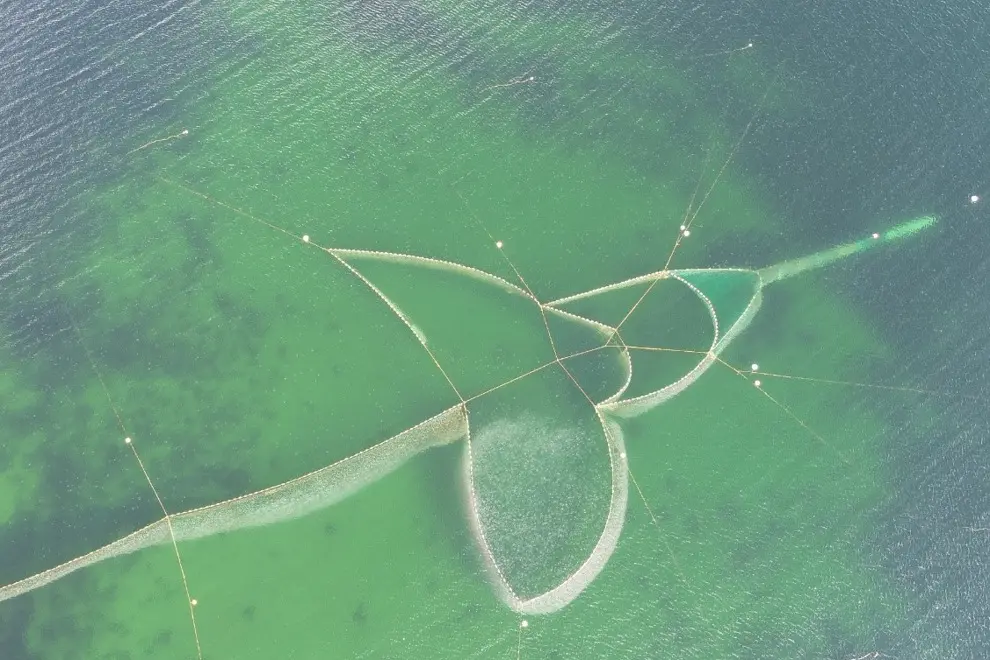
Eel-catching nets seen from drone. Sweden uses drones to track illegal fishing. Sweden and Tanzania share challenges and solutions in for ocean protection. Photo: Swedish Agency for Marine and Water Management Fisheries control
The goal was clear when the Swedish Agency for Marine and Water Management and the Civil Aviation Training Centre Tanzania launched the drone pilot training for marine wardens and managers:
Give teams the tools to protect coastal ecosystems more effectively.
The wardens and managers work in teams form the Marine Parks and Reserves Unit and the Department of Marine Conservation.
‘The training has taken us to a whole new level of understanding”
Amos Singo, Senior Marine Conservation Warden
Participants like the senior conservation warden Amos Singo are now certified drone pilots, ready to map habitats, monitor mammals, and assess human impacts with greater precision than ever before, thanks to our SwAM Ocean program.
Transformative training, government-to-government
“The training was transformative,” says Amos Singo. “Now we can integrate drone technology into our daily work, and turn data into concrete actions for our marine protected areas.”
"This kind of government-to-government collaboration is exactly what makes progress possible," says Jenny Hertzman, conservation lead at SwAM. "Sweden and Tanzania may be worlds apart geographically, but we have the same international commitments and share the same challenges in protecting the ocean. That’s where innovations like drones comes in. In Sweden, we’ve used them to track illegal fishing. Here in Tanzania, they’re taking the technology even further. We’re proud to support their leadership and expertise, and just as excited to learn from their advanced approach."
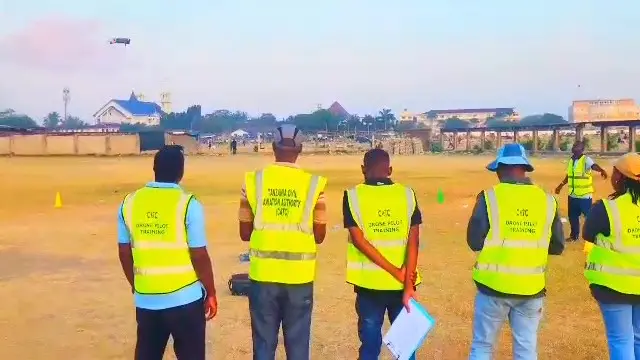
Drone training for marine wardens in Tanzania. Integrating drone technology into daily work to protect marine areas. Photo: Tanzania Civil Aviation Training CentreAuthority
Just the beginning
The training and drone certificates were just the beginning. In upcoming workshops, the teams will deepen their skills in surveillance, mapping, and advanced applications, to:
- track illegal fishing in real time
- monitor coral reefs with high-resolution imagery
- assess climate impacts on coastal areas
“We’re not just learning to fly drones – we’re learning to get a more detailed view of conservation” says the Senior Marine Conservation Warden.
Combining local expertise with cutting-edge technology, Tanzania’s marine protected areas are poised for a smarter sustainable future.
More news
-
News • 2026-10-22
Conservation projects are designed to create positive change, but even well-intentioned actions can have unexpected consequences for people, communities and nature.
-
News • 2026-06-08
The sun beats down on the rain-soaked tarmac in Mombasa. 33 degrees in the shade. 84 percent humidity. Behind thick curtains, people hard at work, hot laptops, programming and ecology. This is where Kenya’s system for marine environmental impact assessments is being built.
-
News • 2026-05-21
SwAM and WiMS Women’s Day webinar launches new tool on how to integrate gender and diversity into conservation projects.


